
Neuromusicology
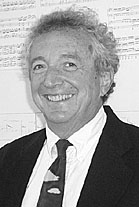 What is the relationship between music and the brain? A leading theoretician on that topic was Dr. Gordon Shaw (left), who died last month, and was most famous for discovering the so-called Mozart effect (addtional link), which evolved into the folk “meme” which claimed that listening to classical music makes your smarter. Before long, people were playing Mozart to their babies in their cribs. In fact, what Shaw had shown was simply that listening to Mozart improved performance on spatio-temporal tasks for ten minutes.
But the Mozart business overshadowed the immense body of ground-breaking research that Shaw carried out. Working at the University of California at Irvine, Shaw focused on cortical organization, developing his unique, columnarly-based trion model. A list of his papers is on the web site of the MIND Institute, the group Shaw founded to continue his brain research and explore applications to elementary education, in the form of the Math+Music program which combines non-language based computer math games with specialized piano training.
Shaw’s model for the architecture of the cortex was set forth in his paper entitled “Model of cortical organization embodying a basis for a theory of information processing and memory recall.” The abstract states:
Motivated by V. B. Mountcastle’s organizational principle for neocortical function, and by M. E. Fisher’s model of physical spin systems, we introduce a cooperative model of th cortical column incorporating an idealized substructure, the trion, which represents a localized group of neurons. Computer studies reveal that typical networks composed of a small number of trions (with symmetric interactions) exhibit striking behavior—e.g., hundreds to thousands of quasi-stable, periodic firing patterns, any of which can be selected out and enhanced with ony small changes in interaction strengths by using a Hebb-type algorithm.
I’m wondering how Jeff Hawkins managed to write an entire book about cortical architecture without mentioning Shaw’s work.
A particular intriguing aspect of Shaw’s theory is that humans love music because it resonates with the innate columnar cortical structure. Xiaodan Leng then derived music directly from these theories, yielding eerily human-sounding, classical-like pieces; get your MP3s here!
Neurotheologically, what conclusions can we draw from Shaw’s insights? In the West, we think of religion as having a heavy musical component; after all, every cathedral has its organs, and Bach’s “religious” compositions tickle those trions of yours every bit as well as Mozart does, but this focus on music, at least of the cerebral kind, may be peculiar to Christianity. You don’t hear people talking too much about “Buddhist music”. Perhaps in a neurotaxonomy of established religions, Christianity occupies a position closer to the cortex.
March 11th, 2006 at 08:54
could you give me the details of some courses in neuromusicology that can be done after graduation?
September 20th, 2006 at 13:24
I am student at the New England School of Communications in Bangor, ME. I am studying audio engineering and I am extremely interested in the effect of music on the brain. I would like to study in this field after I get the degree I am currently working on. I would appreciate any information you could give me not only on neuromusicology but on any schools or individuals able to instruct in the field. Thank you for your time.
January 8th, 2007 at 14:53
I have found that neuromusicology is not always the best keyword for a search. “Music and cognition” are usually better terms. Please find below a link to the syllabus for a class taught at MIT; the suggested readings may steer you in the right direction. Also, the website for the Institute of Music and Brain Science, Boston. Good luck!
http://ocw.mit.edu/OcwWeb/Health-Sciences-and-Technology/HST-725Spring2004/CourseHome/index.htm
http://www.brainmusic.org
December 3rd, 2007 at 22:17
[…] Previous post on neuromusicology. […]
August 27th, 2008 at 15:36
I had the opportunity to spend a semester or so with Gordie doing a research elective in physics in 1990 at UC Irvine. He wrote a paper that gets little attention, that I know was close to his heart, and mine. It concerned his idea that there was something else besides the trion to consider: that there was a central pacemaker, without which, the trion would only be recycling and/or resonating noise. I am returning to my academic work after years of child-rearing etc and would welcome any potential collaborators. I am currently pursuing a PhD in statistics at Wayne State with a focus on Monte Carlo analysis, Gordie’s favorite stat method.
Carey S Vigor-Zierk MD
October 17th, 2008 at 07:41
we are carring out a study of the cortical areas associated with music perception using fMRI. melodic music was used . it would be of immense help to us if you could provide us with some materials regarding this topic . We are undergraduates from the field of speech and hearing.
September 25th, 2015 at 06:59
Dear Sir;
My name is Susan and I was a musical prodigy. I am in my 40’s now and continue to perform musically professionally, have written several musicals, countless scenes for students, and an improve actress, photographer, and artist. You could say an overload of creativity. It can be fairly lonely when not many like-minded friends and family seem to understand how I think and perceive the world.
Here is what’s been happening to me….
I work with dementia patients and my own memory seems to be unbelievably acute. I am not a “date” person with exact dates bring me to that day and what was happening, but I have a perceptual imprint where sensory anything brings me back to that person wearing that cologne, facial recognition, directions to a place I was at once as a child, music is the main thing that seers into my brain and stays.
I was going to be part of an approved case study via Vanderbilt Univ. hospital in TN years ago but after contracts were written up and I had been interviewed via telephone conference by the team and we were moving forward, the head of the study retired and thus it was halted.
My prodigious mind has been untapped in that as an adult I still don’t know how to read music and they were highly interested in my brain and its uncanny ability to remember things, particularly music, and its correlation between that and Alzheimer’s research.
I would very much like the opportunity to be able to be part of such a study as its my life’s work. Any interest? Any thoughts where I could go to initiate such an idea?
Thank you for letting me know~
Please contact via the email below as that’s my home email.
Susan Perti
610-522-7462
Erinsue1971@gmail.com