Archive for the ‘dogen’ Category

Drawing donuts–first paragraph

Sunday, April 9th, 2006

I’ve been looking at Dogen’s “Gabyo” (“drawing rice-cakes”, or, as I prefer, “drawing donuts”), and, in an extreme case of spending too much time on individual sentences, have gotten stuck on the very first line.
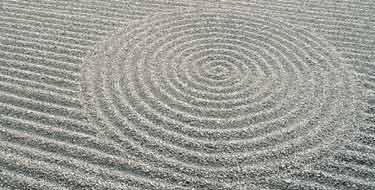
It says, “諸ä»?ã?“れ証ã?ªã‚‹ã‚†ã‚‘ã?«ã€?諸物ã?“れ証ã?ªã‚Šã€‚”

A very initial approximation would be “the various Buddhas are SHO and therefore the various things are SHO.”

Here, SHO means proof, validation, or, sometimes, enlightenment. An obvious interpretation would be that the “various Buddhas are enlightened”, but in what sense would it then follow that that implies that “the various things are enlightened”? Can things be enlightened? Is it because various Buddhas are enlightened that things are enlightened? This would seem to fail the test of obviousness.

Other translators have addressed this problem as follows:

  • All buddhas are realization, thus all things are realization.
  • Buddhas are the state of experience itself, and so things are the state of experience itself.
  • When all the Awakened Ones are realized through Awake Awareness, all things are Awake Awareness.
  • When Buddhas experience truth, they experience becoming one with the world.

All of these seem to miss the mark. Perhaps the intent is something like “Those who have found the truth share experience with the things around them.”

Unfortunately, this is only the first sentence of an essay that goes on for several hundred more. If the first sentence took me one month to translate, the entire essay will take a decade!

There is another underlying issue here. We know that this “Gabyo” essay itself is addressing the issue of the relationship between image and reality. Dogen is saying that images—whether mental or physical—are not merely representations of reality, but are a form of reality in their own right. The question is, how do the initial sentences above relate to this overall meaning of the essay? Is Dogen making a point about the nature of the “things” which he will be discussing images of? None of the current translations address this.

Meeting reality halfway

Saturday, February 25th, 2006

MIT World has put up a video here of Jeff Hawkins talking about Numenta and his Hierarchical Temporal Memory (HTM) model.

It’s a bit strange. On the one hand Jeff is a kind of naive realist. But then he develops a theory of brain functioning critically dependent on top-down, inside-out feedback and guidance systems. In other words, he says we see donuts because we already know what donuts are supposed to look like. He “understands” that “we” are copartners in constructing our experience of reality—but doesn’t “understand” that he “understands” it.

The same point, from a Buddhist, cognitive science standpoint, is the argument made in The Embodied Mind: Cognitive Science and Human Experience by Francisco J. Varela (details), Evan T. Thompson, and Eleanor Rosch. They present a post-cognitivist, post-connectionist view, integrating subject and object, which they call “enactive cognitive science”. Theirs is a “middle way”, between a mechanical view of cognition as a set of robotic sensors, and a simplistic “it’s all in your mind” mentalism. Varela, of course, is the late Chilean biologist known for, among other things, inventing the word neurophenomenology. This book may be one of the few philosophy books in the world with a lengthy explanation of animals whose visual color space is 2-dimensional, or even 5-dimensional (some birds)! The authors’ call for science to incorporate personal experience into its methodologies echoes that of the Dalai Lama—not surprising, since Varela was a student of Tibetan Buddhism.

Of course, Dogen is talking about exactly the same thing in Genjo Koan, where he tells us:

When we experience sights and sounds, body and mind outstretched, we do so directly, not as reflections in a mirror, not as the moon and the water.

The “outstretching” of our body and mind here is precisely the feedback loop down from our beliefs and learned patterns. The word “directly” is 親しく (shitashiku), which could probably also be translated as “intimately”. Dogen is giving us his basic model of cognition, still clear as a bell after 750 years. (Although you could never tell this from other translations.)

The last two phrases are not mere throw-away Zen-like images. Dogen is specifically contrasting his model with two alternatives. The first, “reflections in a mirror”, is the robot eye. The second, “moon and water”, is the “Matrix”-like simulacrum.

Dogen is saying, in other words, our outstretched body and mind provide a context which shapes and interprets sights and sounds—meeting reality halfway.

Philosophy of translation (II)–what words “mean”

Thursday, January 5th, 2006

“You always try to fit the original word to your understanding, instead of the other way round. But a good translator cannot be like that.”
I disagree profoundly (previous post) with these words of Mike Cross (website) addressing his teacher Gudo Nishijima in a comment (now deleted) on the latter’s blog. (Cross is perhaps best known as the co-translator of Dōgen’s Shōbō Genzō.)

Actually Mike, translators should neither “fit the original word to [their] understanding” nor the other way around. Instead, the original word(s) and the translator’s understanding should inform and resonate with each other.

Complaining about Nishijima’s rendering of the Sanskrit nirodha as “self-regulation” and proposing instead that it “means” “stopping, checking, inhibiting”, Cross goes on to say, “First you should say what the original word literally means; and then you should explain your interpretation of it”.

Now I know nothing about either Sanskrit or Buddhist theology. But I do know something about language and meaning, and this statement reveals an abysmal lack of understanding of the nature of both. The “original word” does not “literally mean” anything other than itself in its own language. Words are mere linguistic force fields; wet, squishy semantic blobs; kaleidoscopic mappings onto realities which themselves vary among both writers and readers.

Cross continues, “It is necessary to respect the original word more than one’s own opinion”.

Hmmm. I can “respect” the word(s) Genjō Kōan in its own language, but what does it mean to “respect” them when I am translating? The “literal meaning”, taking the “meaning” of “literal meaning” “literally”, is something like appear-become-public-notice. But in the Nishijima-Cross translation this is glossed, instead, as “The Realized Universe”. How does that translation “respect” the “literal meaning” of the “original word” Genjō Kōan? In the translator’s notes, Cross claims that genjō “means” realized. Who’s fitting words to his own understanding now? (Personally, I think “unfolding”, my translation, is a far better translation of genjo than “realized” (past tense), but then again, I do not claim to be “respecting” the original Japanese nor to be conveying its “literal meaning” as Cross does.)

Cross continues his criticism of Nishijima, saying “If people saw your own original translation of Shobogenzo, they would be astonished, because it is so interpretative”. It’s interesting to learn that Nishijima did an original translation into English. I’d love to see it. Interpretive? Well, I hope so. Every linguistic act—writing, translating, reading—is by definition an act of interpretation. And that’s the only way it could be.

Genjo Koan reloaded (II)

Sunday, December 25th, 2005

As mentioned in an earlier post, I’ve completely redone my translation of Dōgen’s Genjō Kōan, entitled “Unfolding Puzzle”. I have now put up the entire translation on-line (PDF).

Of course, the book is still available as an attractive, printed 32-page booklet from Lulu.

Another excerpt:

Sometimes, God shows us a world replete with wisdom and foolishness, daily practice, life and death, saints and sinners. Other times, the clarity and the confusion and the living and the dying and the saints and the sinners and everything else all vanish into namelessness. The true way naturally transcends such opposites. It joins life with death, wisdom with foolishness, the ordinary with the divine. Be that as it may—the blossoms you adore will wither and fall; the weeds you abhor will flourish and sprawl.

Translating Japanese poetry, translating Dogen

Saturday, December 3rd, 2005

What can we learn about translating Dogen from the problem of translating medieval Japanese poetry? Carl Kay (website, pictured), Harvard-trained Japan scholar, entrepreneur, and author, recently shared with me his senior thesis from nearly 30 years ago, entitled “The Translation of Classical Japanese Poetry.”

Kay lavishes praise on Kenneth Rexroth (Wikipedia entry), a critic, essayist, and translator of poetry. Says Kay, “…a reader of Rexroth’s translations experiences the freshness and intensity of the work…[Rexroth] concentrates on conveying the poetic experience.” Compared to scholars who are “concerned exclusively…with the meanings of the words [and whose translations] are as limited in their own way as translations that focus on other levels of the poetry”, Rexroth’s versions “capture the ‘meaning’ as clearly as the scholars but preserves the poetic intensity, the glow of the language, the force of syntax and rhythm that scholars often fail to bring over.”

Although poetry is clearly a different genre than Dogen’s writings, the two have more in common than you might think. Dogen brought a strong poem-like sensibility to his essays, in diction, cadence, word choice, and sentence structure. I would assert that the aspects of Rexroth’s translations praised by Kay are every bit as relevant when it comes to Dogen.

Kay takes issue with the translations of Brower and Miner, who were active in translating classical Japanese poetry in the mid 20th century, accusing them of “using” translation of Japanese poetry as a “vehicle” for their own analysis—for answering the question of what the poems “say”. “Considerations of the poetic experience are subordinated to an understanding of what the poem refers to outside of itself. The emphasis is not on the poem, but on cultural information. [Their] translations often blur into analysis…Their translation seems to be written to be appreciated by other scholars.”

Carl’s entire analysis applies as is to nearly all current translations of Dogen. The translators are not conveying the Dogen experience to us, but rather seem almost to be preaching at us, using Dogen as a weapon.

I will present more of Carl’s insights about translation in future posts.

Another modern translation of Bendowa

Sunday, November 20th, 2005

Dogen translations which are actually readable seem to be getting more popular. Now Michael Eido Luetchford (picture), whom I had the pleasure of meeting last week, has presented us with his highly accessible version of Bendowa, subtitled “How to Pursue the Truth”.

Luetchford is also the author of Between Heaven and Earth: From Nagarjuna to Dogen, a translation of Nagarjuna’s Mulamadhyamakakarika. He has done a contemporary translation of Uji, which he calls “Being-Present”, as well.

Genjo Koan reloaded

Saturday, November 19th, 2005

I’ve massively revised my translation of Dogen’s Genjo Koan, which I now translate as “Unfolding Puzzle”. The new version is designed to appeal to the contemporary Western sense and is much more interpretive in style, although it is based on a scrupulous re-reading of Dogen’s original Japanese and numerous commentaries and translations both into modern Japanese and English.

I’ve chosen to publish this in the form of a 32-page book available here, where you can also find a free preview, including brief notes about the essay and the translation.

Sample:

Gaining enlightenment
is like water cradling the reflection of the moon.
The moon remains dry;
the water remains unbroken.

However large and bright the moon,
it can be reflected in mere inches of water,
or in the dew on a reed,
or even in a single drop.

Man is no more ruffled by enlightenment
than the water is ruffled by the moon.
Enlightenment can no more be blocked by man
than the moon can be blocked by a dewdrop,
whose depth inevitably fits it to perfection.

Briefly or at length,
examine the expanse of the water;
observe the extent of the moon in the heaven.

Brad Warner on Genjo Koan

Sunday, October 16th, 2005

Brad Warner, the “punk” Zen master, is writing another book, a follow-on to his eminently readable Hardcore Zen. He’s published a sample chapter about Dogen’s Genjo Koan.

Brad brings a refreshing new perspective to anything he looks at, and his take on Genjo Koan is no exception. Unfortunately, as a student of Gudo Nishijima (picture), he’s dealing with the Nishijima/Cross translation, not a particularly good place to start. Consider his treatment of the famous three-part syllogism right at the beginning:

Genjo Koan starts off with what sounds like a string of contradictory statements that don’t seem to make very much sense at all. “When all dharmas are the Buddha-Dharma, then there is delusion and realization, there is practice, there is life and there is death, there are buddhas and there are ordinary beings,” Dogen says right at the outset. OK. No major problems there.

Really? What about the problem that no reader understands what “when all dharmas are the Buddha-Dharma” means?

But then he goes, “When the myriad dharmas are each not of the self, there is no delusion and no realization, no buddhas and no ordinary beings, no life and no death.” Wait up! Hold it! I thought there were all those things and now he says there aren’t.

Wait up! Hold it! What on earth could “myriad dharmas each not being of the self” mean? Cleary has “myriad things not all self”, which does not make much more sense, but in his modern Japanese translation, Mizuno says this means “things themselves do not have a fixed essence”. I render it as “once you’ve stripped things of their selves”.

But Nishijima and Cross have gotten mixed up in other ways, right here in just the second sentence of their translation of Dogen’s signature exposition of his thought. What they translate as “delusion and enlightenment” in the first sentence is meigo ari (迷悟ã?‚り), while the “delusion and enlightenment” in the second sentence is originally madoi naku satori naku (ã?¾ã?©ã?²ã?ªã??ã?•ã?¨ã‚Šã?ªã??).

Certainly it can not be just an accident that Dogen chose such different turns of phrase to indicate exactly the same thing within the space of two sentences at the immediate beginning of the definitive statement of his philosophy? And of course, it’s not. The Sino-Japanese compound used in the first sentence is meant to emphasize that at this stage we are dealing with concepts, standing in opposition. With spelling out individual, native Japanese words in pure hiragana in the second sentence, he is indicating the reality and independence of these categories of confusion and wisdom.

Now on to the third and final sentence:

And then just to be even more contrary he says, “The Buddha’s truth is originally transcendent over abundance and scarcity, and so there is life and death, there is delusion and realization, there are beings and buddhas.”

So what in Holy Heck is going on here with this paragraph? I mean, first he says there is life and there is death, and there is a difference between jus’ plain folks and Buddhas. Yet next he says that when we give up the idea of self, all these distinctions disappear. Then he goes right back to what he said in the first line, that these distinctions are real. Well, which is it? Make up your mind, Dogen!

No, he’s not “going back” to what he said in the first paragraph, he’s going a step further. Using the Sino-Japanese form meigo again, he’s now referring to the unity or fusion of the concepts of confusion and wisdom, or delusion and realization, if you prefer.

Next, Brad takes on Dogen’s most famous single passage, one we have discussed here more than once:

So just what is this Buddha’s truth stuff Dogen keeps going on and on about? By way of explanation, the D-man gives us a kooky little passage that goes like this. Ahem. “To learn the Buddha’s truth is to learn ourselves. To learn ourselves is to forget ourselves. To forget ourselves is to be experienced by the myriad dharmas. To be experienced by the myriad dharmas is to let our own body-and-mind, and the body-and-mind of the external world, fall away.”

But just how do you forget your ideas of “self?” You do so, the D-man says, when you are “experienced by the myriad dharmas.” In other words, we do this when we stop concentrating exclusively on how we experience the universe and learn how the universe experiences us. It’s not as impossible as it sounds.

Yes, but the original does not say “experience”, it says “validate”, “confirm”, or, if you prefer, “realize” (証ã?›ã‚‰ã‚‹ã‚‹).

Brad’s in-your-face, comtemporary thoughts on Genjo Koan are well worth reading. But he should pair them with a suitably contemporary (and accurate) translation of Dogen’s original words.

Drawing donuts

Thursday, September 15th, 2005

Gabyo is one of my favorite Dogen essays. Literally, it means “painted ricecake”, but I would update that and call it “drawing donuts”. In this chapter of Shobo Genzo, Dogen ponders the meaning of the ancient Chinese saying that a painted ricecake cannot satisfy your hunger—or, as I would say, a drawing of a donut can’t fill you up.

Gabyo is the ultimate essence of Dogen’s phenomenological viewpoint, if I may call it that,. He is saying that even a “real” donut is something we “draw” in our “minds”.

The initial paragraph of Gabyo is a tour-de-force introduction to the concept. Tanahashi (in Moon in a Dewdrop) gives a typically opaque, overly literal, basically incomprehensible, and in places erroneous rendition:

All buddhas are realization, thus all things are realization. Yet no buddhas or things have the same characteristics; none have the same mind. Although there are no similar characteristics or minds, at the moment of your actualization numerous actualizations manifest without hindrance. At the moment ofyour manifestation, numerous manifestions come forth without opposing one another. This is the straightforward teaching of the ancestors.

My perhaps overly modern version is as follows. This is not just a rewriting of the Tanahashi translation, but rather is based on the original, with reference to a modern Japanese version.

If you get it, you’re cool, and so things are cool. You are different from things, of course, inside and out. But both you and things pop out when they’re cool because their coolnesses don’t bump into each other. Both can pop out when they pop out only because their poppings don’t poke into each other. This is the wisdom of the ages in a nutshell.

Another reference to “go” in Dogen?

Tuesday, August 23rd, 2005

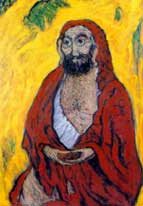
In the “Twining Vines” (Katto) fascicle of his Shobo Genzo, Dogen retells the story of how Bodhidharma (image), on his deathbed, queried his four disciples as to their understanding. The first three gave verbal answers, to which Bodhidharma replied that they had attained his skin, flesh, and bones, respectively. Eka (Huike), in contrast, simply prostrated himself three times (awkwardly, one imagines, since he was missing an arm) and returned to his place. Commenting “You have got my marrow”, Bodhidharma then annointed him his successor.

Dogen’s point here is that Eka was not being “rewarded” for giving the “right” or “best” answer.

According to the Nishijima/Cross translation, where the name of the chapter is infelicitously rendered as “The Complicated”:

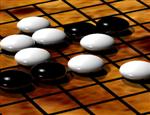
Now, learn in practice, the First Patriarch’s words “You have got my skin, flesh, bones and marrow” are the Patriarch’s words. The four disciples each possess what they have got and what they have heard. Both what they have heard and what they have got are skin, flesh, bones, and marrow which spring out of body and mind, and skin, flesh, bones, and marrow which drop away body and mind. We cannot see and hear the ancestral Master only by means of knowledge and understanding, which are but one move in a go game—not one-hundred-percent realization of subject-and-object, that-and-this.

Leaving aside the stiltedness of the translation, was Dogen really referring to the game of go here? (See another post regarding Dogen and go.) It seems unlikely. The Japanese in question is itchaku-shi (一著å­?). According to John Fairbairn, an expert in archaic Chinese and Japanese, it could “mean one piece, one seed, one son, etc.—or just a pawn = something nugatory”. In other words, a single element, or perhaps “scrap”, which is what I will use below.

The go image is admittedly attractive—comparing our cerebral understanding to one move out of the hundreds that constitute a go game, presumably representing the vast range of types of perception and realization. Unfortunately, it seems that Nishijima/Cross simply invented this.

I would translate this section as follows:

Make no mistake, Bodhidharma meant just what he said: “You have attained my skin/flesh/bones/marrow”. Indeed, everything the four disciples queried by Bodhidharma had either experienced or learned was precisely the skin, flesh, bones and marrow from which body and mind spring forth and drop away. They could not have entered the presence of the venerable master with mere scraps of opinions and logic, for then the question of doing vs. being could not have been adequately illuminated.

Continuing (my translation):

Some may think that some of the four disciples were closer to the truth in their understandings and that Bodhidharma, implying there were degrees of profundity in skin/flesh/bones/marrow or that skin and flesh is more distant from the truth than bones and marrow, recognized Eka’s attainment of the marrow because his understanding was superior. Sadly, however, such people, having yet to learn the ancestors’ way of study, miss Bodhidharma’s true message.